
Nobody tells you that feeding a baby has no clear start or end time. One day baby eats every hour, and the next week feeds stretch out and you wonder if something changed. If you have ever searched for answers on your phone at 3 a.m., you are in good company.
A baby feeding schedule by age can help, as long as you treat it as a loose map and not a strict rule. Babies grow fast, and their needs shift from month to month. Early on, feeding follows baby’s cues. Later, milk and meals start to share the day.
This post has 12 ideas that follow baby through the first year. You will see how cluster feeds and growth spurts look in real life, how to spot early hunger cues, and how to make bottle feeds calmer. Then we move on to high chair setup, the texture ladder for first foods, a sample day, finger food safety, and the switch to cups.
Every baby is different, so check with your pediatrician if you have any worries. Save this post for the days you need it most.
1. Cluster Feeds Happen Anywhere, So Dress for Easy Access

Early feeding has no clock. Many newborns feed around 8 to 12 times in 24 hours, and evenings often bring cluster feeds, when baby wants to nurse again and again over a few hours.
What makes those long stretches easier:
- Watch for hunger cues like rooting and hands to mouth, not the time on your phone
- Wear soft, loose layers, like the chunky cream knit in this photo
- Keep water and a snack within reach before you sit down
- Pick one comfy spot, even a blanket on the grass, and settle in
If feeding worries you or baby seems unwell, call your pediatrician.
In the first weeks, baby’s schedule is the schedule.
2. Wide Eyed and Distracted: Why Feeds Change Before Solids Start
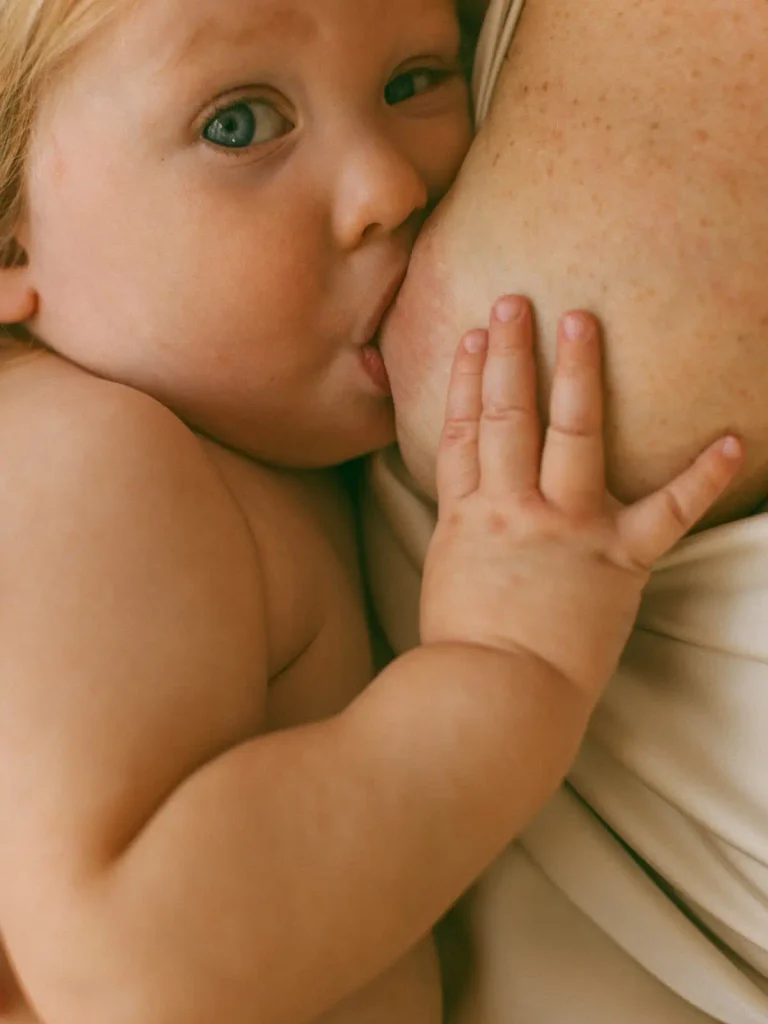
Bright eyes, one hand spread wide, and a baby clearly tracking everything in the room. Somewhere in the middle months, feeds often get shorter and busier. Baby pops off to look around, then comes back for more. That is curiosity, not proof that milk is not enough.
It often shows up around the same time as solids readiness, usually near 6 months. Look for steady head control, sitting with support, and a baby who stares at your plate. Milk is still the main food at this stage.
Watch out: if weight gain or wet diapers worry you, ask your pediatrician before changing anything.
Feed in a dim, quiet room when baby gets distracted.
Offer again after a short break to look around.
Cutting milk feeds to start solids early.
Pushing a full feed when baby keeps turning away.
3. Paced Bottle Feeding Keeps Newborn Feeds Calm

Bottles hold formula or pumped milk, and either way the speed of the flow matters. A baby who gulps can get fussy, gassy and overfed. Paced feeding copies the slower rhythm of the breast and lets baby set the pace.
If you use formula, mix it exactly as the tin directs. Extra water or extra powder is never a shortcut.
Hold baby semi upright, head supported, not lying flat.
Touch the nipple to baby’s lips and wait for a wide open mouth.
Tip the bottle just enough to fill the nipple, with the bottle closer to level than upside down.
Pause every few sucks, then stop when baby turns away or slows down.
4. Early Hunger Cues Show Up Before the Crying Starts

Crying is actually a late hunger sign. By then baby may be too upset to latch or take a bottle well. The quieter signals come first, and they are easy to miss when you are tired.
Catch them early and feeds tend to go smoother for everyone.
A calm baby is far easier to feed than a frantic one.
5. Growth Spurts Can Turn Your Whole Day Upside Down

One week feeds are spaced out, and the next baby wants to eat all the time. That is often a growth spurt, and it usually passes within a few days. Feed more often, skip the rigid plan, and expect a fussier baby.
Babies also have a knack for doing this right when you feel you finally figured things out.
⚠️ Watch Out
If hungry behavior drags on, or you see fewer wet diapers or a very sleepy baby who will not feed, call your pediatrician.
It is a phase, so there is nothing to fix.
6. What a Baby Feeding Schedule by Age Really Looks Like
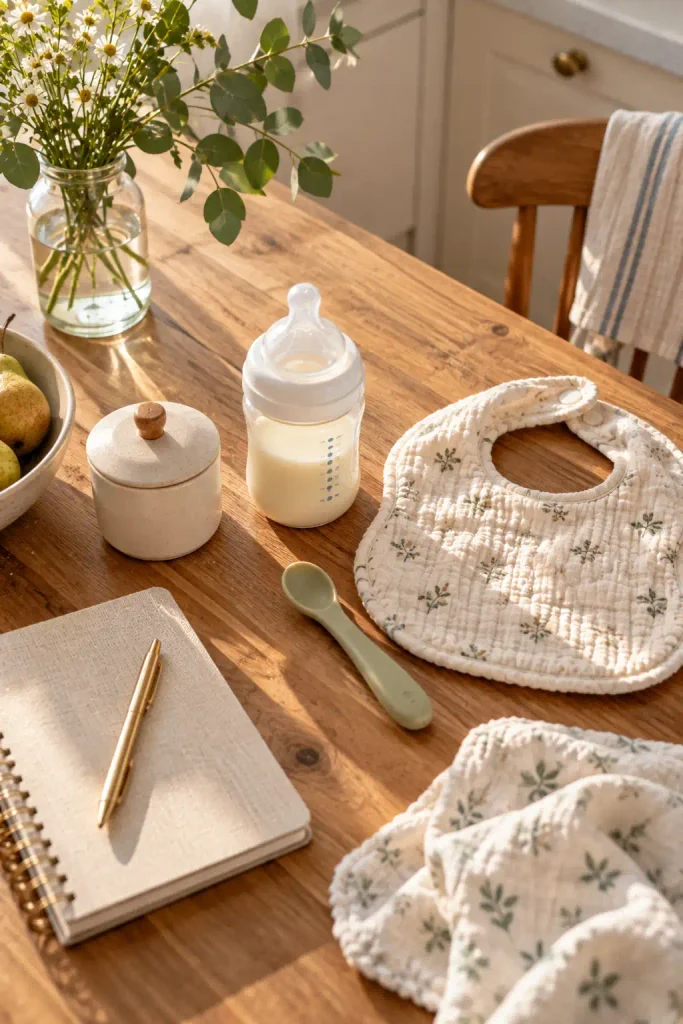
Babies do not read charts. Still, a rough map helps when you feel lost, so here is a loose one. Use it as a guide, not a test baby has to pass.
| Age | Typical rhythm |
|---|---|
| Newborn | Frequent feeds, day and night, on demand |
| 1 to 3 months | Still frequent, a loose pattern may appear |
| 3 to 6 months | Feeds spread out, some babies sleep longer at night |
| Around 6 months | First solids begin, milk is still the main food |
| 9 to 12 months | Meals get bigger, milk fills the gaps |
Your baby may sit a little ahead or behind this map, and that is normal.
7. Set Up the High Chair Before the First Bite
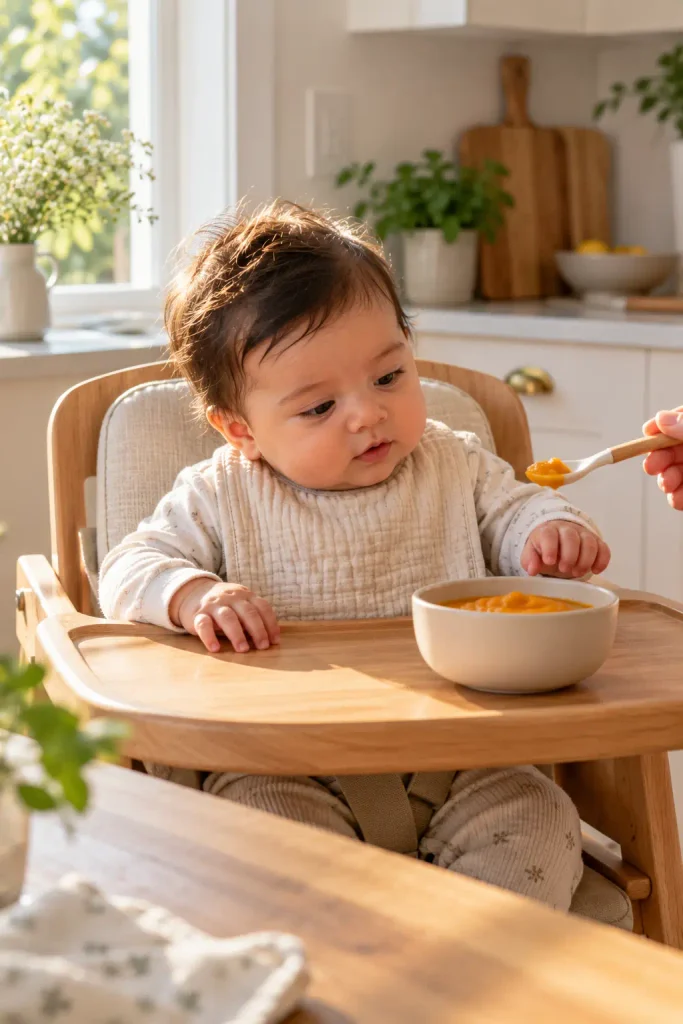
Sitting well with support is the big green light for solids, and the seat matters as much as the food. A slumped baby is harder to feed and more likely to gag.
Pick a time when baby is alert and curious, not starving. A hungry baby wants milk first, so offer a little milk beforehand and save the experiment for after.
Before you serve
Never leave a baby alone while eating, not even for a second.
8. Texture Ladder: Thin Puree, Thicker Mash, Soft Lumps

Solids start smooth and thin, then thicken over weeks. There is no set speed, so watch baby’s chewing and swallowing and move up when they seem ready.
- Iron rich foods like well cooked meat, beans and iron fortified cereal are often suggested early
- One new food at a time makes reactions easier to spot
- Soft strips of food work too if you prefer a baby led style
- Ask your pediatrician about allergen foods and how to introduce them
Smooth and runny puree, off the tip of a spoon, a taste at a time.
Thicker mash with soft lumps and small soft finger foods.
Gagging is common while baby learns. Choking is different, so learn the signs ahead of time.
9. A Sample Day at 7 to 9 Months

Nobody gets this exactly right. Still, it helps to see how milk and meals can share a day. Use the order as a loose guide and change it around your baby’s naps and your own routine.
Milk still does a lot of the work at this age, so solids are extra for now.
10. Finger Foods at 9 to 12 Months Need a Safety Check
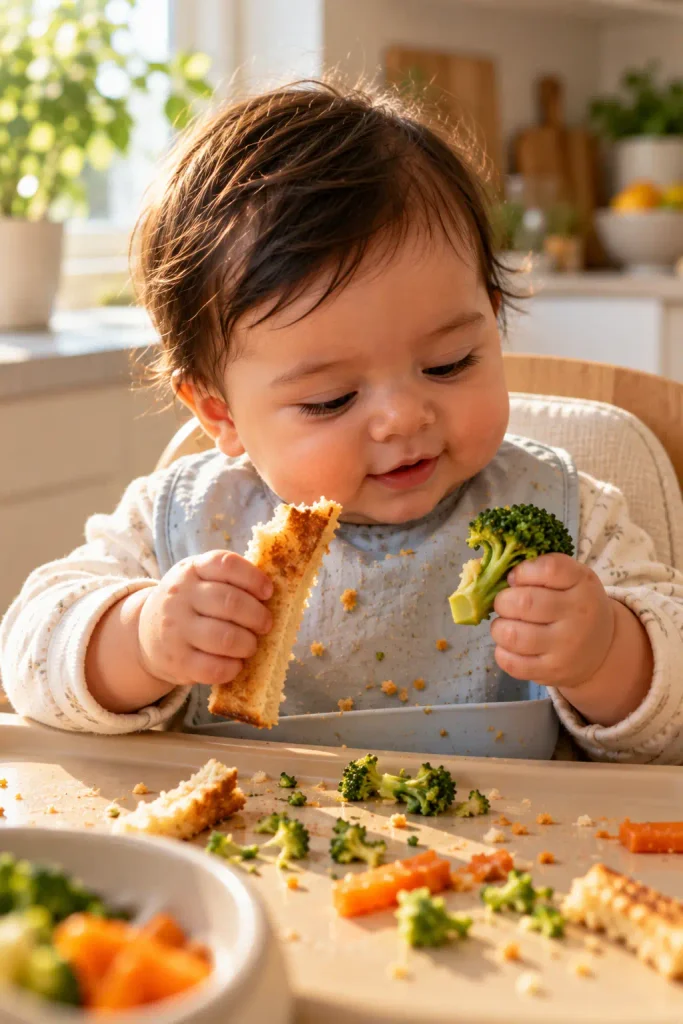
Around this age many babies pick up small pieces with a pincer grasp. That is great for independence, but it means size, shape and softness matter.
Soft steamed veggies, ripe banana, tender pasta and toast strips are common picks. Honey is off the list until after the first birthday. Foods that are small, hard or round need extra care.
Soft cooked veggies you can squish between two fingers.
Ripe fruit, cut in strips or mashed.
Whole grapes, whole nuts and popcorn.
Raw hard veggies like carrot sticks and honey.
Sitting down, calm and supervised, is the safest way to eat.
11. Water and Open Cups Belong at the Meal Table
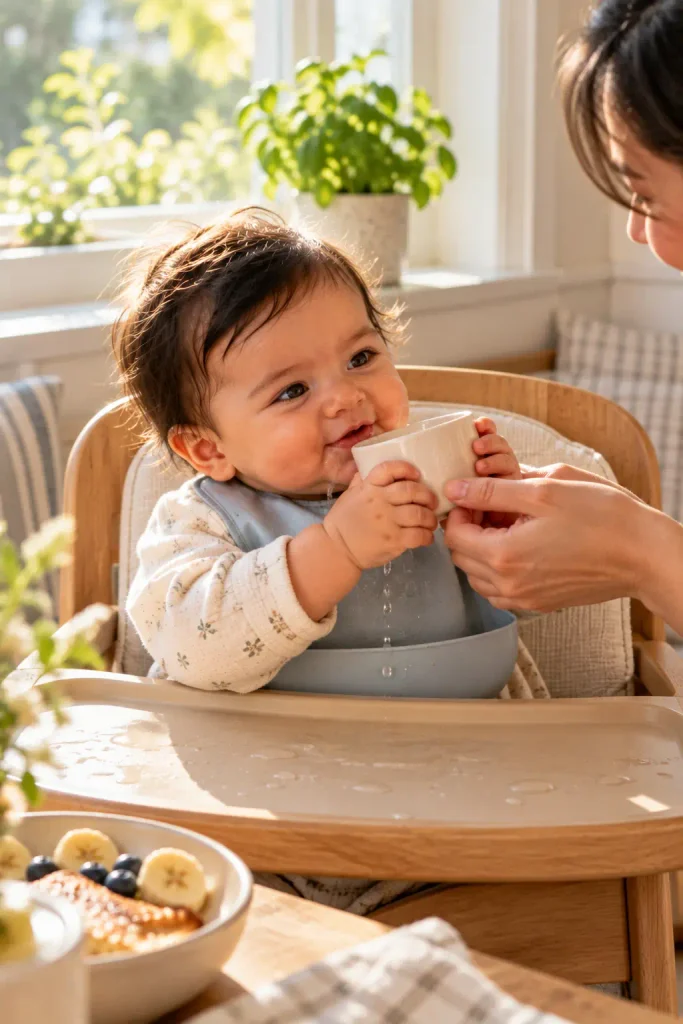
Once solids begin, baby can start practicing with small sips of water at meals. It is about learning the cup, not quenching thirst. Milk is still the main drink for now.
An open cup or a straw cup both work, and a tiny amount is plenty. Expect spills and splashing.
Ask your pediatrician if you are unsure how much is right for your baby.
12. Turning One Means Meals Lead and Milk Follows

Around the first birthday, the balance shifts. Many babies eat three meals plus snacks with the family, and milk fills in around them. Cow’s milk can often be offered as a drink at this age, but ask your pediatrician about timing and amounts.
If you are breastfeeding, you can keep going for as long as you and baby both want to. Bottles usually start to fade out around now too, with a cup taking over.
Food takes the lead now, and milk fills in the gaps.
Conclusion
Feeding a baby is part routine and part guesswork, and that is okay. Use this baby feeding schedule by age as a starting point, then trust what you see in your own baby. Hunger cues, wet diapers, and a happy, growing child tell you more than any chart can.
Some days will be messy. Some feeds will last an hour. Those days pass, and the next stage always brings something new to learn.
If this helped, save it to your parenting board on Pinterest so you can find it at the next growth spurt. Share it with a friend who is up at night with a little one, too.
Related reading
- Newborn sleep schedule — the full guide to wake windows and nights
- Newborn sleep tips — ten ways to get more rest
- Baby sleep gowns vs footed pajamas — eight sleepwear looks compared
- Baby nursery ideas — nine calm, cozy newborn room designs
Part of our complete guide
Everything in one place: the full Newborn Sleep Schedule guide, with every related article.