
It is 3 a.m. You have fed, burped, changed and rocked. Baby is finally asleep, and you are afraid to breathe. If that sounds like your week, you are not doing anything wrong. Newborns sleep in short bursts, wake often to eat, and have no idea what night means yet. The good news is that a few small changes can help everyone get more rest.
These newborn sleep tips are built for real life, when you are tired, holding a baby and scrolling with one thumb. Some are about safety, like the bare crib and the back to sleep rule. Some are about soothing, like a tummy down hold or a snug swaddle. Others help you, the parent, like splitting the night into shifts and setting up a night station. Save the ones that fit your house, skip the ones that do not, and remember that no tip works every single night. Let’s get you some rest.
1. Skip the Loose Blanket and Keep the Crib Bare
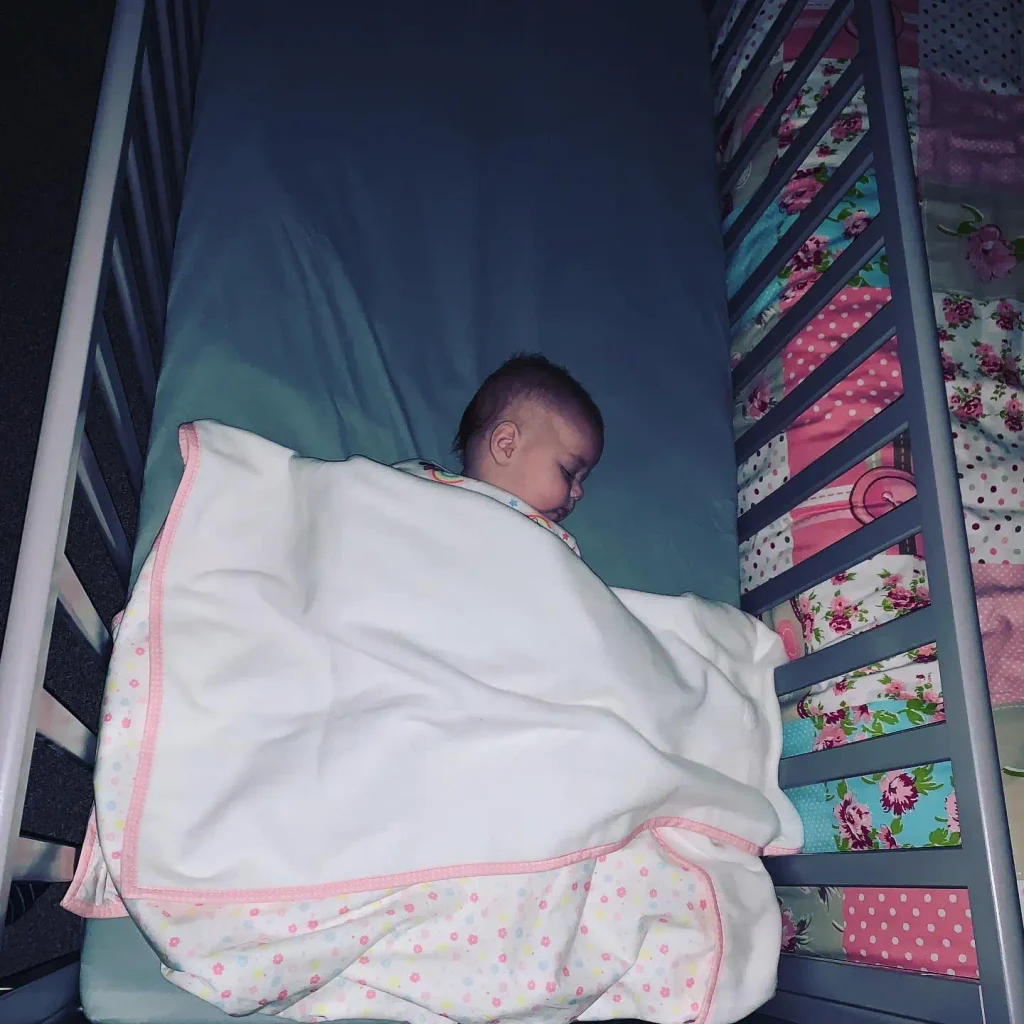
Cozy is not the same as safe, and a bare crib is the safest bed you can give a newborn.
- Lay baby on their back for every sleep.
- Use a firm, flat mattress with a fitted sheet and nothing else.
- Leave out loose blankets, bumpers, pillows and toys.
- Dress baby in a wearable sleep sack for warmth.
To check the temperature, feel baby’s chest or the back of their neck. Cool hands and feet are normal. If the chest feels sweaty, take a layer off.
A loose blanket draped over baby and soft padding along the crib rails.
A bare crib with a fitted sheet, and baby on their back in a sleep sack.
2. Enjoy the Chest Nap While You’re Awake, Then Move Baby to Their Own Bed

Some nights the only place a newborn will sleep is on you. That is normal, and a chest nap is lovely when you are awake and alert. The risk starts when a worn out parent dozes off with baby on a bed or sofa. So treat the chest nap as the warm up, and the bassinet as the real sleep spot.
Hold baby chest to chest while you sit up and stay awake. Set a phone alarm if you need one.
Wait for heavy, floppy limbs and slow, deep breathing.
Lower baby onto their back in the bassinet. Keep a hand on their chest for a minute.
Feeling yourself fade? Move baby to their own bed right away.
3. The Tummy Down Hold That Calms a Fussy, Gassy Evening

Around dinner time, some babies fall apart for no clear reason. Gas, overtiredness and plain newborn feelings all pile up at once. The tummy down forearm hold gives many parents a few calm minutes.
Lay baby along your forearm with their tummy on your arm and their legs hanging on either side. Cup your hand under the chin to support the head, keep the face clear, and sway or pat their back slowly. Keep it to short stretches and watch baby the whole time.
Watch out
Awake only. Sleep always happens on the back.
4. A Snug Swaddle for the Newborn Who Startles Awake

Newborns can jolt themselves awake with their own arms. It is the startle reflex, and a swaddle helps calm it. Wrap baby snug across the chest, and leave the hips loose so the legs can bend. You should be able to slide two fingers between the wrap and baby’s chest. Lay them down on their back, every time.
Two rules matter most. Stop swaddling when baby starts trying to roll. And take off headbands and bows before sleep, since they can slip over the face.
| Swaddle | Sleep sack |
|---|---|
| Arms tucked in, wrap snug at the chest. | Arms free, zips up like a small sleeping bag. |
| Hips loose so legs can bend and open. | Roomy at the bottom so legs can kick. |
| Best in the early weeks, when startles wake baby. | Best once baby shows signs of rolling. |
| Stop the moment baby tries to roll. | Pick a size that matches baby’s weight. |
5. Bright Days and Dim Nights Teach Baby What Time It Is

Newborns do not know day from night. Their body clock takes weeks to form, so you can nudge it along.
In the daytime, open the curtains, keep normal house noise going and chat during feeds. At night, keep the lights low, your voice soft and diaper changes quick. No playing and no bright screens. Baby slowly learns that dark and quiet means sleep.
It will not fix things overnight, but it adds up.
6. Newborn Sleep Tips Start With Sleepy Cues, So Catch Them Early

Babies tell you they are tired, just very quietly. Newborns can only stay awake for a short stretch, often an hour or less, so the window is small. Learn the early signals and start winding down right then.
Sleepy cues to watch for
- Staring off into space
- Yawning or rubbing the eyes and face
- Turning away from you or from the toy
- Jerky arms and legs
- Small fussy sounds that are getting louder
Wait for hard crying and you have missed it. An overtired baby fights sleep much harder than a sleepy one.
7. Turn On the White Noise, Then Turn It Down

The womb was never quiet. A silent room can feel strange to a newborn who spent months hearing a heartbeat and muffled voices. A steady shush, a fan or a sound machine can help baby settle. Shushing by hand is free, but it needs your voice and your arms. A machine keeps going when you cannot.
Quick tip
Put the sound machine across the room, never inside the crib, and keep the volume no louder than a quiet conversation.
8. Split the Night Into Shifts So Both of You Get a Real Stretch

Two tired people taking turns beat two tired people getting up together. Pick a hand off time, like midnight. Before it, one parent handles every wake up. After it, the other parent takes over. The off duty parent sleeps with earplugs, ideally in another room.
Feeding by breast? The other parent can still change diapers, burp and settle baby afterward, so you get back to bed faster.
Doing this solo? Ask one friend or grandparent to cover a morning block. That is your shift.
Parent A: feeds, changes and settles baby.
Parent B: sleeps with earplugs in.
Parent B: feeds, changes and settles baby.
Parent A: sleeps with earplugs in.
9. Set Up a Night Station So 3 A.M. Runs on Autopilot

By 3 a.m. your brain is running on fumes and instinct. Do the thinking at bedtime instead. Stock one small spot near where baby sleeps so every night wake up takes minutes, not a scavenger hunt.
Skip the overhead light. One bright bulb wakes baby up and wakes you up for good.
- Diapers and wipes within arm’s reach
- A spare sleepsuit and sleep sack, folded and ready
- Burp cloths for spit ups
- A dim, warm nightlight
- Water and a snack for you
- Phone on the charger with the sound off
10. Know When to Ask for Help, for Baby and for You

Tired is normal. Tired and worried is a sign to speak up. When a friend offers to hold the baby for an hour, say yes, and go to sleep instead of cleaning. Then keep an eye on the health of both of you.
Asking for help is a sleep tip too.
Watch out
Call your baby’s doctor or midwife if baby is hard to wake for feeds, is feeding poorly, has a fever, or seems to work hard to breathe. If baby struggles to breathe or looks blue, call emergency services right away.
Call for yourself too if you feel low, panicky, or cannot rest even when baby sleeps. Postpartum depression and anxiety are common and treatable.
Conclusion
Nobody gets newborn sleep perfect, and nobody needs to. Pick one or two of these newborn sleep tips for tonight, like a bare crib, a dim night station or a shift plan with your partner. Give them a few days before you judge them. Babies change fast, so what fails this week may work next week. Be kind to yourself in the meantime. You are doing a hard job on very little sleep. Save this post to a Pinterest board so it is ready the next time 3 a.m. rolls around, and follow along for more gentle newborn help.
Pick one tip, not all ten. Small changes add up faster than a perfect plan.
Keep planning
- Newborn sleep schedule — wake windows, feeds and safe-sleep rules, week by week from 0–3 months
- Baby nursery ideas — set up a calm, safe sleep space with our full nursery safety checklist
Related reading
- Newborn sleep schedule — the full guide to wake windows and nights
- Baby sleep gowns vs footed pajamas — eight sleepwear looks compared
- Baby feeding schedule by age — from cluster feeds to first solids
- Baby nursery ideas — nine calm, cozy newborn room designs
Part of our complete guide
Everything in one place: the full Newborn Sleep Schedule guide, with every related article.