Home / Baby Care / Baby Nursery Ideas
Nursery & kids room decor
Baby Nursery Ideas for Every Room Size, Style and Budget
Baby nursery ideas combine a color scheme, a theme, furniture and storage into one safe room for sleep, feeding and nappy changes. The best baby nursery ideas follow current trends, fit small rooms, suit a budget and grow with the child. This guide covers trends, color schemes, themes for boys, girls and neutral rooms, wallpaper, layouts, furniture, storage, lighting and safety.
60-30-10
The colour rule
16–20°C
Lullaby Trust room range
$500
Budget build starting point
6 mo
AAP room-share minimum
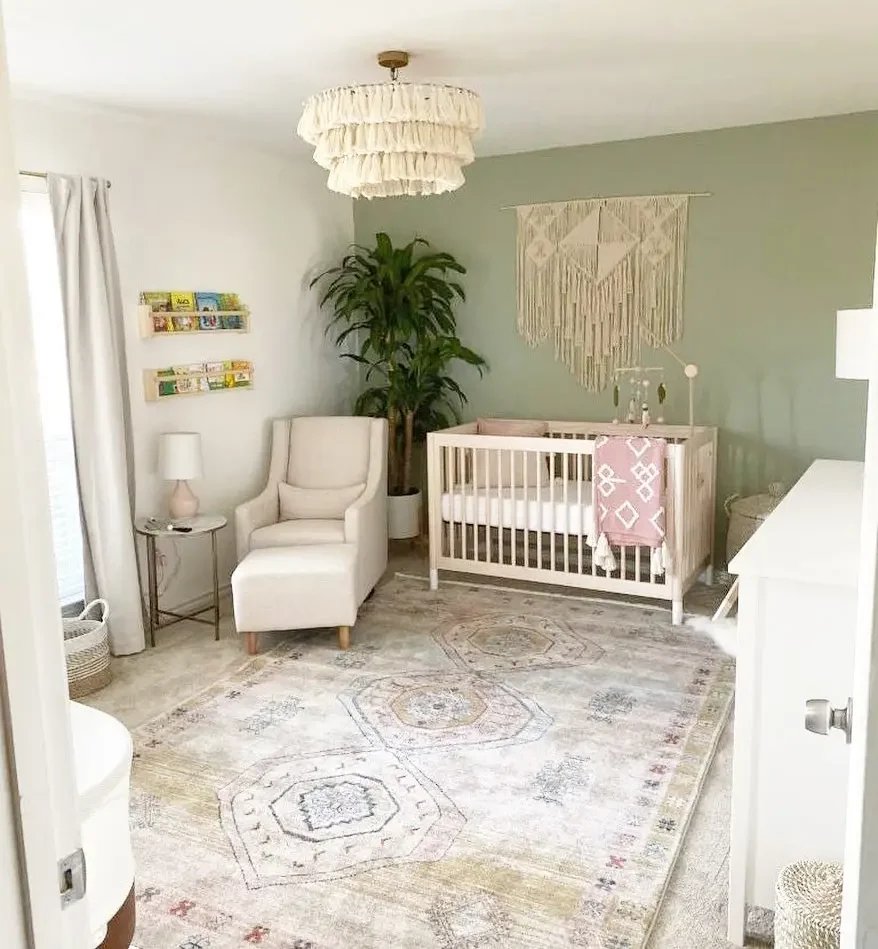
Reviewed & sourced
Safety guidance from the AAP & Lullaby Trust
Nursery & kids room decor
Latest nursery & kids room ideas
Nursery and kids’ room ideas for every space and budget, colour schemes, small-room storage, furniture picks and the safety checks that matter.
-
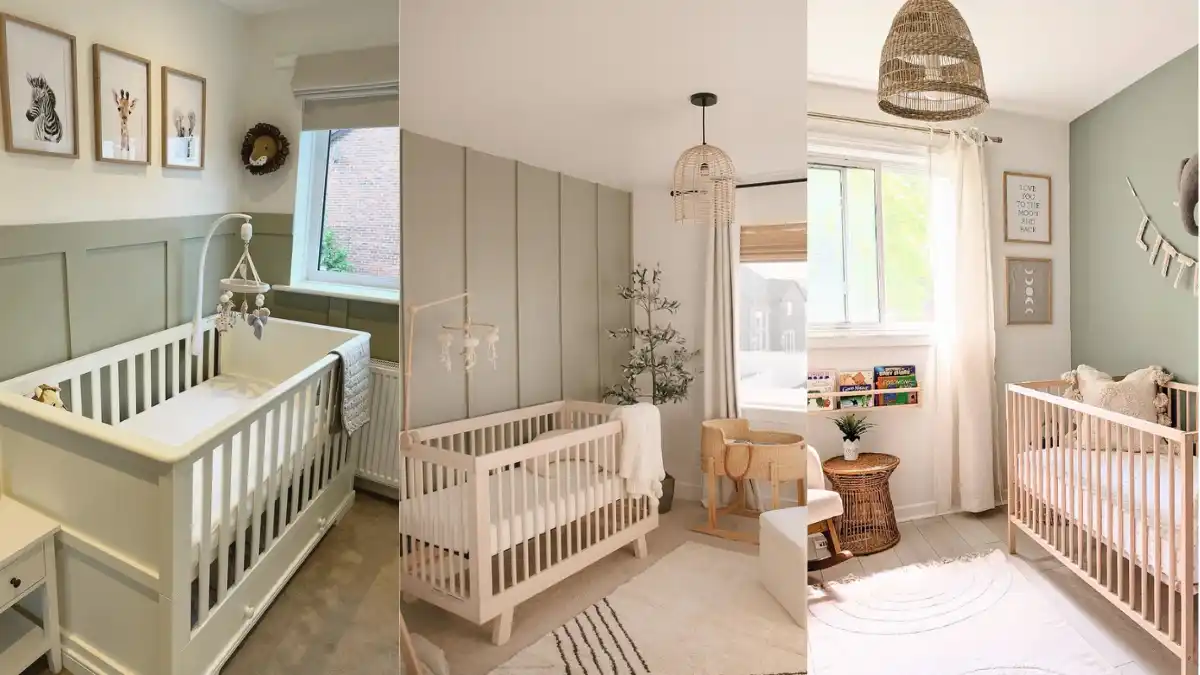
Gender Neutral Nurseries That Feel Warm, Not Washed Out
9 gender neutral nurseries that feel warm, not washed out, with sage walls, woven lights, texture and one-wall paint ideas you can…
-
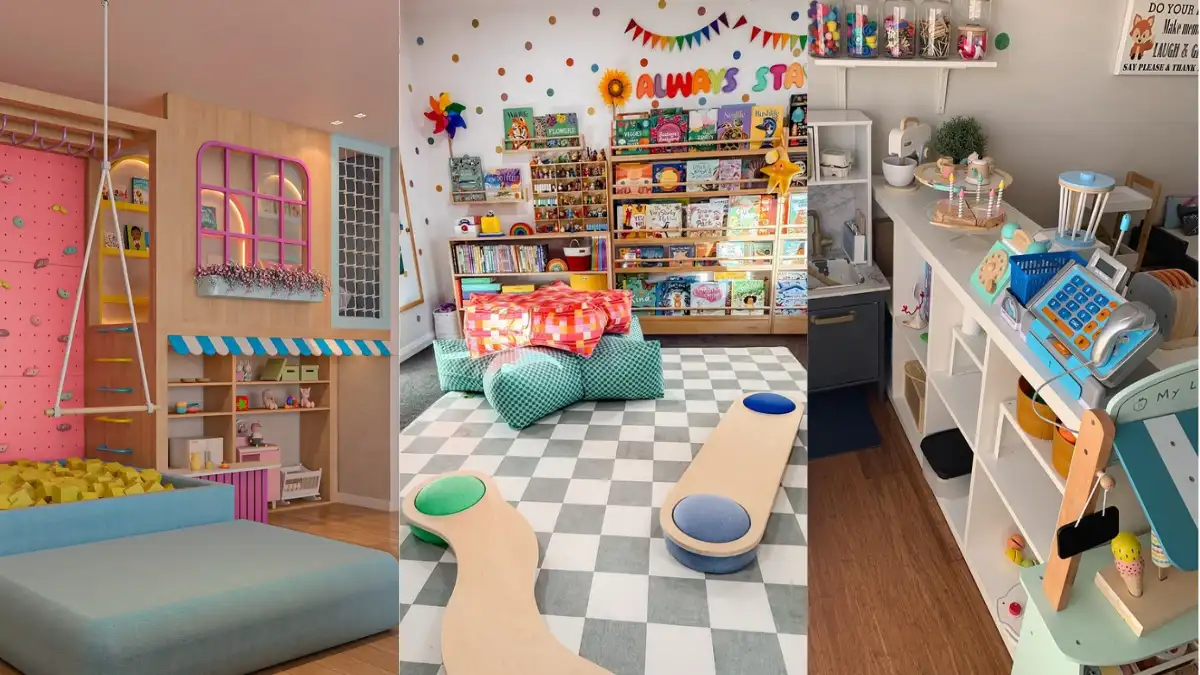
Playroom Ideas for Kids That Keep Toys Organized and Mess Manageable
Try 10 playroom ideas for kids that keep toys organized, from low shelves to themed zones, so cleanup stays quick and mess…
-
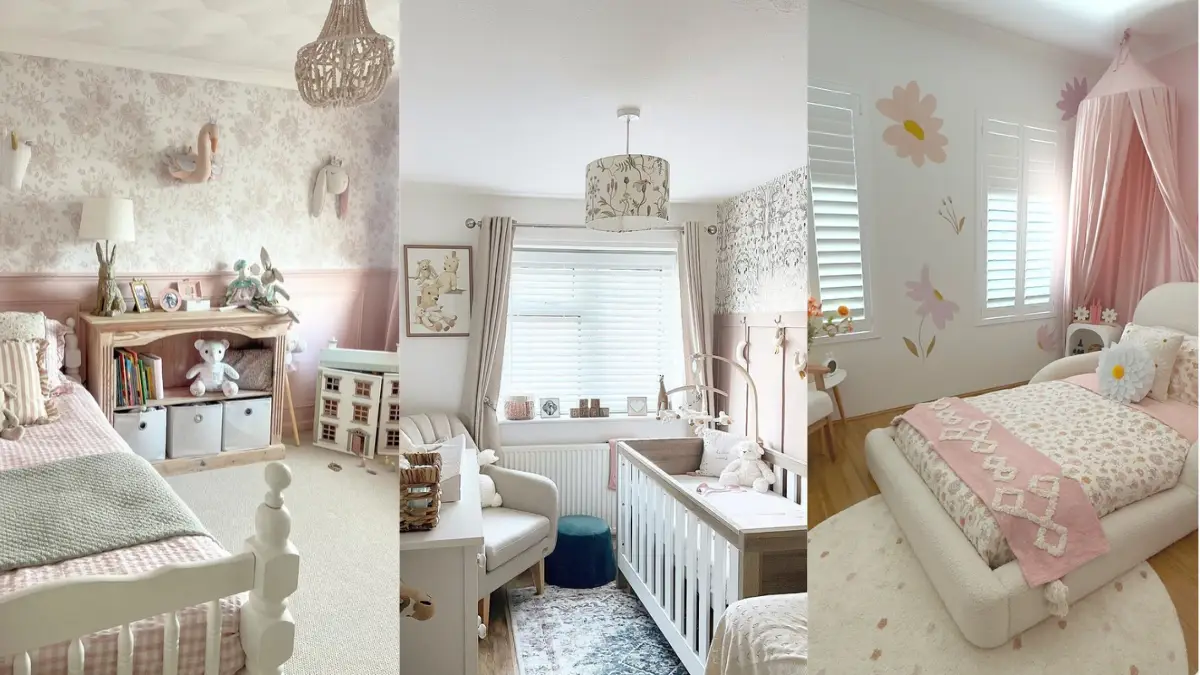
Baby Girl Nursery Ideas That Grow With Her Past the Toddler Years
Browse 12 baby girl nursery ideas that last past the toddler years, from dusty rose paneling and wallpaper to canopy beds, rugs,…
-
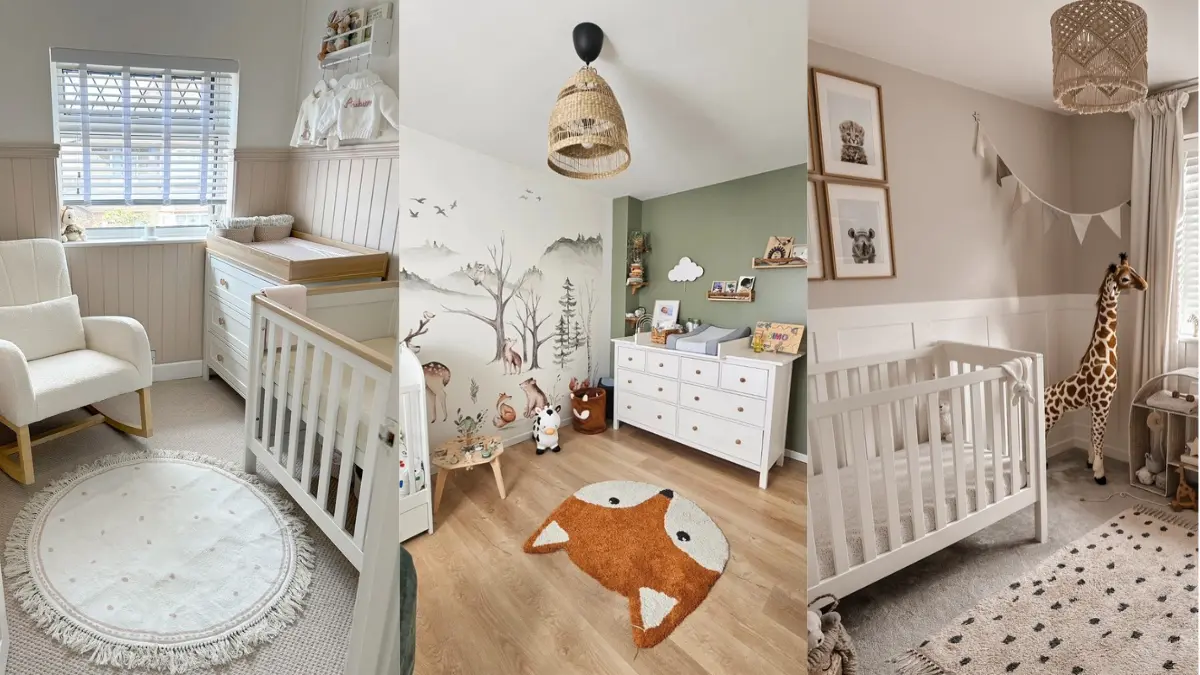
Baby Nursery Ideas to Design Your Perfect Newborn Room
Browse 9 baby nursery ideas with sage walls, murals, paneling and smart storage to design a calm, cozy newborn room.
What Is Trending in Baby Nursery Decor Ideas?
Seven styles are trending in baby nursery decor right now, and the all-white nursery is no longer one of them. White rooms show every mark, feel cold and look the same as thousands of other nurseries.
What’s In
- Sage green and cream: calm, gender-neutral and matched to every wood tone
- Terracotta and warm neutrals: earthy tones influenced by Wabi Sabi design
- Dark and moody palettes: navy, forest green and charcoal for a cosy sleep space
- Maximalist whimsy: bold wallpaper, pattern mixing and gallery walls of small framed art
- Montessori minimalism: low furniture, natural materials and very few toys out at once
- Nature themes: woodland animals, botanical prints and earthy palettes
- Celestial themes: stars, moons, clouds and midnight blue with gold accents
What’s Out
Four looks are fading from nurseries, including bundled furniture sets and character murals.
- All-white rooms that look clinical and show every mark
- Matching furniture sets bought as one bundle, which read as cookie-cutter
- Strongly gendered pink or blue schemes, replaced by personal palettes
- Character murals that date quickly as a child’s interests change
How Do You Curate a Gender-Neutral Nursery?
To curate a gender-neutral nursery, start with a neutral base such as cream, sage or soft grey and layer color through 4 accessories: artwork, books, stuffed animals and textiles. A durable performance fabric on the chair and rug keeps the neutral base clean.
A gender-neutral nursery works in 5 proven combinations, including sage green with rattan, white walls with one bold accent wall and a rainbow on a white background. The full list of themes appears in the theme section below.
How Do You Choose Nursery Color Scheme Ideas?
To choose a nursery color scheme, give one calm color 60% of the room, a secondary color 30% and an accent color 10%. Interior designers call this the 60-30-10 rule, and the ratio keeps a nursery restful rather than stimulating.
The 60-30-10 Rule
- 60% dominant color: walls and large furniture in a calm neutral such as sage, cream, soft grey or warm white
- 30% secondary color: rug, curtains and accent chair in a deeper or contrasting shade
- 10% accent color: cushions, artwork and small accessories, where bold or metallic touches belong
Ready-Made Color Schemes
There are 5 ready-made nursery color schemes, including gender-neutral modern, boho and dark and moody.
- Gender-neutral modern: sage green walls, cream furniture and terracotta accents
- Boho: warm white walls, rattan and natural wood furniture, rust and dusty pink accents
- Dark and moody: forest green walls, dark walnut furniture and brass hardware
- Minimalist Scandi: white walls, light beech furniture and grey textile accents
- Celestial: navy accent wall, cream furniture and gold star details
Specific Paint Recommendations
Five paint colors suit nursery walls, including Farrow & Ball Mizzle and Benjamin Moore White Dove.
- Farrow & Ball “Mizzle” No. 266: a soft sage green
- Benjamin Moore “White Dove” OC-17: a warm white
- Sherwin-Williams “Sea Salt” SW 6204: a calm teal-green
- Little Greene “Sage Green” 80: an earthy green that sits well with wood tones
- Dulux “Timeless”: a UK neutral that still feels warm
Choose low-VOC (volatile organic compound) paint and finish painting 4 to 6 weeks before the due date, so the room airs out before the baby sleeps there.
Pro tip
Test paint on the actual wall and look at the swatch at 3am under the nightlight, not only at midday. Nursery colors change under artificial light.
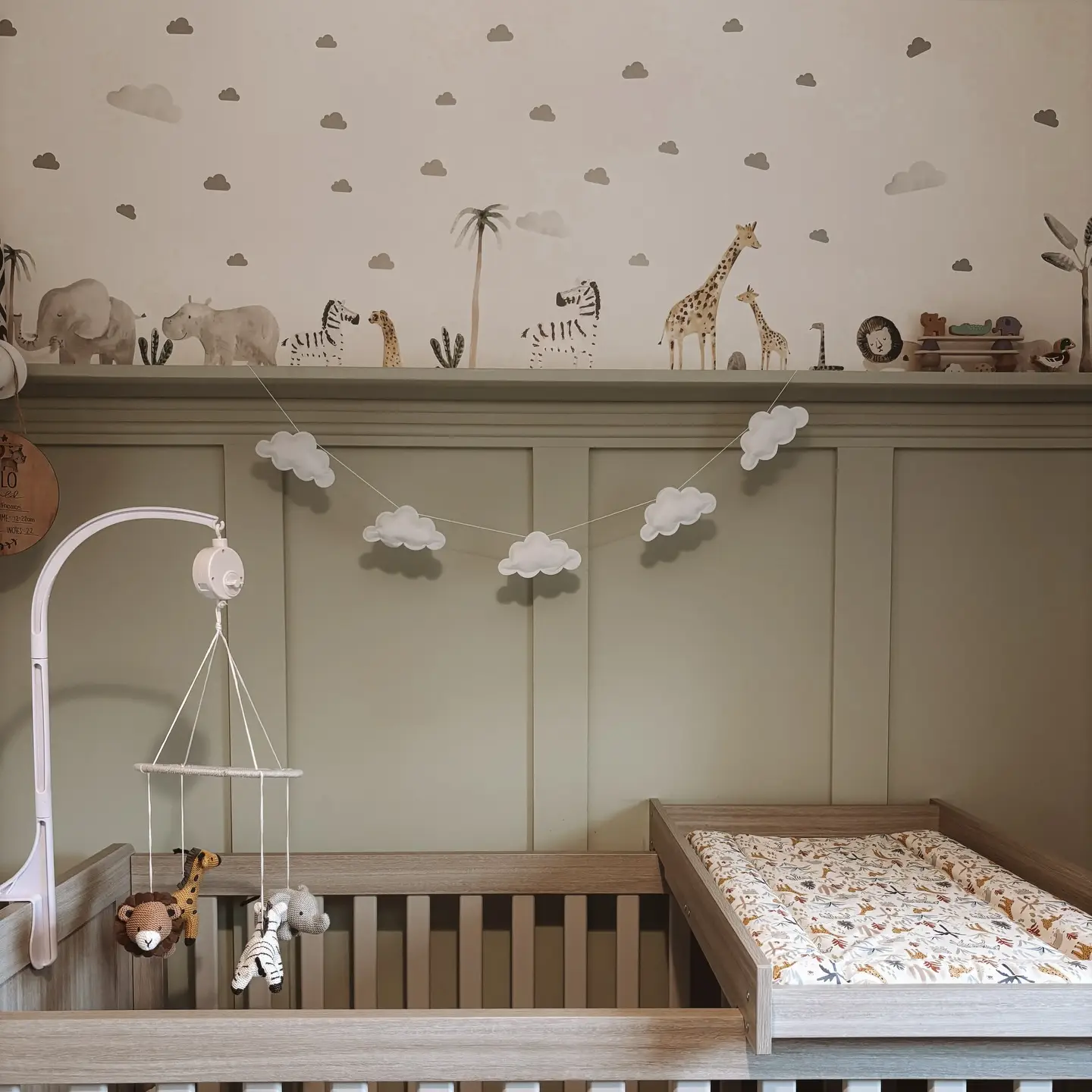
Baby Nursery Theme Ideas for Boys, Girls and Neutral Rooms
Baby Boy Nursery Ideas
Baby boy nursery ideas include 5 popular looks, such as navy nautical, earthy jungle and space.
- Navy, cream and stripe wallpaper for a nautical look without the cliché
- Earthy jungle themes with greens, browns and linen
- Vintage sports with old-school typography prints
- Space themes with a painted star mural and silver accents
- Dinosaur themes in earthy greens with natural wood
Baby Girl Nursery Ideas
Baby girl nursery ideas include 5 popular looks, such as floral wallpaper, blush pink with a vintage rocker and a crib canopy.
- Floral wallpaper with sage green and rattan furniture
- Blush pink and cream with a vintage rocking chair
- A canopy over the crib with dried flower garlands
- Chinoiserie wallpaper for a formal look
- Pink with warm wood tones and Peter Rabbit prints
Gender-Neutral and Neutral Nursery Ideas
Neutral nursery ideas include 5 palettes and themes that suit any child.
- Sage green, cream and rattan, the most popular neutral palette
- White walls with wood tones and one bold accent wall
- Woodland animals in soft earth tones
- A rainbow on a white background
- Montessori rooms with natural materials, low shelves and minimal decoration
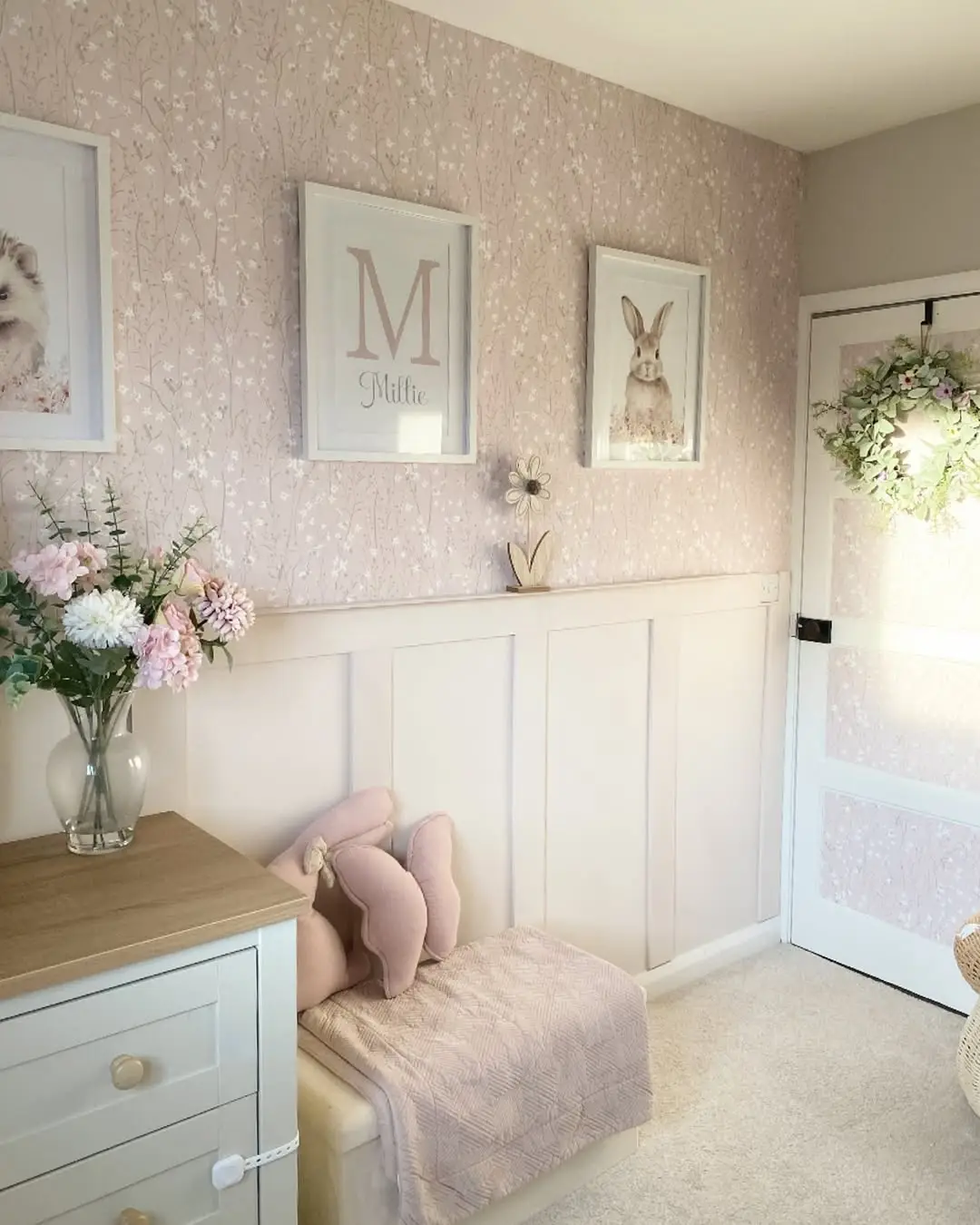
Jungle, Woodland, Safari, Ocean, Balloon and Rainbow Themes
Six animal and sky themes dominate nursery theme ideas: jungle, woodland, safari, ocean, hot air balloon and rainbow.
- Jungle: large leaf wallpaper, a rattan mobile and a deep green accent wall
- Woodland: fox, deer and owl prints in rust, moss and cream
- Safari: sand and olive tones with giraffe or elephant wall decals
- Ocean: seafoam and sand walls with whale art and a woven basket for storage
- Hot air balloon: a balloon mobile, cloud ceiling decals and soft sky blue paint
- Rainbow: a rainbow arch mural or rainbow wall hanging on white walls
Modern and Vintage Nursery Ideas
Modern nursery ideas use clean lines, a limited palette of 3 colors and one statement piece, such as a sculptural pendant light. Vintage nursery ideas use antique details such as a framed quilt, plaid curtains and a spray-painted crib in powder blue.
Nursery Themes for Twins
The best nursery themes for twins repeat one color and pattern in matching pairs, such as 2 scalloped Roman shades, 2 cribs and a shared chinoiserie or floral wallpaper. Give each twin one accent of a different color, such as a blanket or name sign, if a personal touch matters.
Nursery Wallpaper and Mural Ideas
Five wallpaper and mural ideas work in a nursery: an accent wall behind the crib, peel-and-stick wallpaper for renters, a painted rainbow arch mural, ceiling wallpaper and chinoiserie prints.
- Accent walls behind the crib, using wallpaper on 1 wall and paint on the other 3
- Peel-and-stick wallpaper that removes cleanly in a rented home
- Rainbow arch murals painted by hand or applied as removable decals
- Ceiling wallpaper in a small star or cloud print for an unexpected detail
- Chinoiserie prints in blush, sage or blue for a formal, long-lasting look
Nursery Ideas With Panelling
Nursery ideas with panelling use picture-frame or board-and-batten panels up to about 36 in (90 cm) high, painted in one color, with a lighter paint or wallpaper above. Sage green panelling with a cream upper wall is the most common pairing.
Nursery Ideas With White Furniture
White furniture works in a nursery when walls carry the color: sage, navy or a patterned wallpaper make a white crib and dresser stand out. Add wood tones or rattan, so the room does not look cold.
How Can You Convert a Room to a Nursery?
To convert a room to a nursery, follow 6 steps: measure, clear, paint, light, place furniture and secure it.
- Measure the room and sketch a layout with a free floor planner
- Clear the space and move out items that do not belong in a baby’s room
- Paint with low-VOC paint and add wallpaper to 1 wall
- Install dimmable lights and blackout curtains
- Place the crib away from windows, radiators and cords, and put the chair beside the crib
- Secure every dresser and bookshelf to the wall with anti-tip straps
Adult furniture works in a nursery, so a spare dresser, an armchair and a bookshelf already in the house reduce the cost. Add a soft rug, removable decals and framed prints for the playful touches.
Baby Nursery Ideas for Small Rooms and Layouts
A nursery needs about 6 x 8 ft (1.8 x 2.4 m) to fit a crib, a dresser and a chair. A standard crib measures about 53 x 29 in (135 x 74 cm), and a 10 x 10 ft (3 x 3 m) room fits a crib, a dresser with a changing topper and a sleeper chair, with space left for a diaper pail and a toy basket.
A separate room is optional. The American Academy of Pediatrics (AAP) recommends room-sharing, not bed-sharing, for at least the first 6 months, and ideally up to 1 year, so a well-designed bedroom corner is a normal choice.
Nursery Layout Ideas
- Place the crib on a wall away from windows, radiators and curtain cords
- Put the changing station near the door and within reach of the diaper supply
- Set the feeding chair beside the crib with a small table and a lamp
- Leave a clear walkway of at least 30 in (76 cm) from the door to the crib
- Use the corner nearest the window for a reading nook
Space-Saving Strategies
- A convertible crib that becomes a toddler bed and then a daybed, such as the Babyletto Hudson 3-in-1
- Wall-mounted shelving instead of a second dresser, or IKEA KALLAX as a changing station base with a topper
- Under-crib storage in fabric bins or rolling drawers for nappies, wipes and spare bedding
- A back-of-door organiser repurposed from a shoe organiser
- Vertical storage in tall bookshelves that use wall space rather than floor space
- A wall mirror that makes a 6 x 8 ft (1.8 x 2.4 m) nursery look more open
Nursery Furniture Ideas
Five pieces of furniture cover a nursery: a crib, a dresser with a changing topper, a feeding chair, blackout curtains and a white noise machine.
- Crib: look for JPMA certification. Budget option: IKEA Sniglar. Mid-range: Babyletto Hudson. Premium: Pottery Barn Kids Larkin.
- Dresser with changing topper: more versatile than a standalone changing table, and IKEA HEMNES is a popular choice.
- Feeding chair: firm lumbar support matters more than looks for hours of night feeds. IKEA POÄNG suits a budget and a Dutailier glider suits a mid-range plan.
- Blackout curtains: daytime naps and early bedtimes need a dark room, and IKEA MAJGULL is the budget standard.
- White noise machine: the Hatch Rest doubles as a nightlight and a toddler clock later on.
Nursery Organization and Storage Ideas
Seven storage ideas keep a nursery organized: cube shelves, low baskets, drawer dividers, a hanging wardrobe organiser, book ledges, a closet diaper station and wall hooks.
- IKEA KALLAX cube shelves with fabric bins for toys and open cubes for display
- Labelled wicker baskets at low height, within reach once the baby is mobile
- Drawer dividers for tiny socks, scratch mittens and newborn hats
- A hanging wardrobe organiser with one section per size: 0-3M, 3-6M and 6-12M
- IKEA MOSSLANDA book ledges that show board books face-forward at child height
- A small closet diaper station with wipes, creams and spare outfits on one shelf
- Wall hooks for hats, bags and bibs instead of display-only shelves
Anchor every shelf and dresser to the wall, and keep heavy items on low shelves.
Nursery Lighting, Rug, Art and Curtain Ideas
Nursery Lighting Ideas
A nursery needs 3 layers of light: a dimmable ceiling fixture, a task lamp at the feeding chair and a soft nightlight. Dimmable fixtures give full light for changing and a low glow for night feeds, and warm bulbs of about 2700 K keep the light gentle.
Nursery Rug Ideas
A 5 x 8 ft (1.5 x 2.4 m) rug fits under the front half of the crib and the feeding chair. Choose a low-pile or washable rug with a non-slip pad, and pick a graphic pattern if the walls are neutral.
Nursery Art, Shelf and Curtain Ideas
- Gallery walls with frames spaced 2 in (5 cm) apart and hung above the dresser, never above the crib
- Shelves that hold lightweight books and soft toys, with heavy items kept low
- Blackout curtains with a cordless lift or tie-back, lined for naps
- A mobile that hangs out of reach and comes down when the baby starts to push up on hands and knees
Baby Nursery Ideas on a Budget
A budget nursery costs $500 to $800 with an IKEA crib and dresser, a second-hand glider and basic storage, while a mid-range nursery runs $1,500 to $3,000 and a premium nursery with designer furniture and custom drapery reaches $5,000 and above.
- Buy a new crib mattress and a crib that meets current safety standards, and buy other furniture second-hand
- Paint walls instead of wallpapering all four
- Use peel-and-stick wallpaper on 1 accent wall
- Repurpose an existing dresser with a changing topper
- Print free artwork and frame it in thrifted frames
- Choose a convertible crib that lasts from birth to toddler age
A second baby nursery refresh costs less, since a new paint color, new bedding and a fresh rug change the room while the crib and dresser stay.
Baby Nursery Safety Checklist
Ten safety checks come first in every baby nursery. Complete the list before the baby sleeps in the room for the first time, based on guidance from the AAP and the Lullaby Trust.
- Crib slats no wider than 6 cm (2⅜ in) apart, since older or second-hand cribs often fail this standard
- Mattress fit with a gap of less than two finger widths at the sides
- Bare sleep space with no soft bedding, bumpers, pillows or positioners
- Anchored furniture with anti-tip straps on every dresser and wardrobe, the highest-risk items in a nursery
- Cordless blinds only, since blind cords are a strangulation hazard within reach of a crib
- Monitor cords kept well out of reach for the same reason
- Room temperature of 16-20 °C (61-68 °F), the Lullaby Trust range, since overheating raises SIDS (Sudden Infant Death Syndrome) risk
- A working smoke detector in or just outside the nursery
- A carbon monoxide detector if the home has gas appliances or an attached garage
- Nothing hanging above the crib that could fall into it
Add outlet covers and cabinet locks before the baby starts to crawl. This page gives design ideas and general safety guidance, and a pediatrician answers questions about a specific baby.
Keep planning
- Newborn sleep schedule, wake windows, feeds and safe-sleep rules, week by week from 0–3 months
- Baby shower themes, 100+ themes with decoration, food and game ideas
- Pregnancy announcement ideas, creative ways to share the news with partners, family and friends
Frequently Asked Questions
What are the best nursery colors for baby sleep?
Soft, muted colors such as sage green, warm cream and soft grey are the best nursery colors for baby sleep. Bright primary colors and high-contrast patterns near the crib are stimulating, so keep them to accents. Farrow & Ball “Mizzle,” Sherwin-Williams “Sea Salt” and Benjamin Moore “White Dove” are reliable wall choices.
How much does it cost to set up a baby nursery?
A baby nursery costs $500 to $800 on a budget, $1,500 to $3,000 mid-range and $5,000 and above for premium furniture and custom drapery. A budget nursery uses an IKEA crib and dresser, a second-hand glider and basic storage.
What are good baby nursery ideas for a small room?
Good baby nursery ideas for a small room are a convertible crib, wall-mounted shelving, under-crib storage, a wall mirror and a closet diaper station. A room of 6 x 8 ft (1.8 x 2.4 m) fits a crib, a dresser and a chair.
What is a Montessori nursery?
A Montessori nursery is a room that prioritizes independence and natural development. Key features are a floor mattress or low bed frame the child reaches from around 6 months, shelves at child height, natural materials such as wood, cotton and wool, a few toys displayed at once and a reading corner at floor level.
Do you need a nursery before the baby arrives?
No, a full nursery is not needed before the baby arrives. The AAP recommends room-sharing for at least the first 6 months, so many babies sleep in their own room well into the first year. A safe sleep space in the parents’ room, a place to change nappies and a place to store clothes are needed from day one.
What is the ideal nursery room temperature?
The ideal nursery room temperature is 16-20 °C (61-68 °F), the range given by the Lullaby Trust. Overheating is a recognized risk factor for SIDS, so feel the back of the baby’s neck to check, since hands and feet are naturally cooler.
How big should a nursery be?
A nursery should be at least 6 x 8 ft (1.8 x 2.4 m) to fit a crib, a dresser and a chair. A 10 x 10 ft (3 x 3 m) room adds space for a rug, a bookshelf and a toy basket.
Can you use dark paint in a nursery?
Yes, dark paint such as navy, forest green or charcoal works in a nursery. Use low-VOC paint, add dimmable lighting and pair the dark walls with cream or white furniture, so the room does not feel heavy.
More Nursery Inspiration
- Baby Girl Nursery Ideas
- 9 Real Newborn Nursery Rooms
- Playroom Ideas for Kids
- Baby Sleep Gowns vs Footed Pajamas
- 10 Newborn Sleep Tips
Also useful: Newborn Sleep Schedule and Unique Baby Names.
Keep reading
More guides for the first year
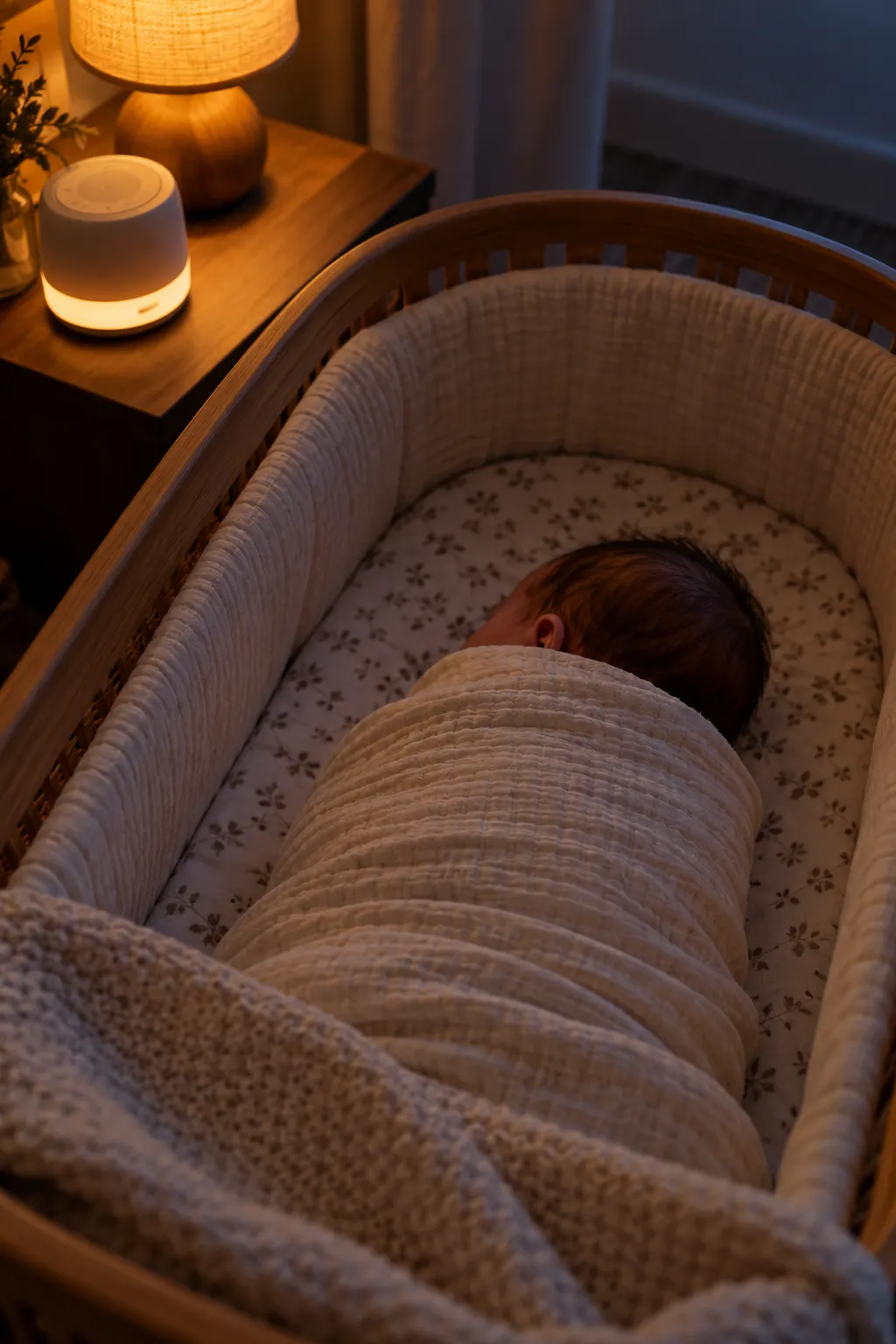
Week-by-week guidance from 0–3 months: wake windows, feeds, and safe-sleep rules, every number cited.
Read the guide

Rare, vintage, and gender-neutral names with meanings, origins, and honest popularity data.
Read the guide
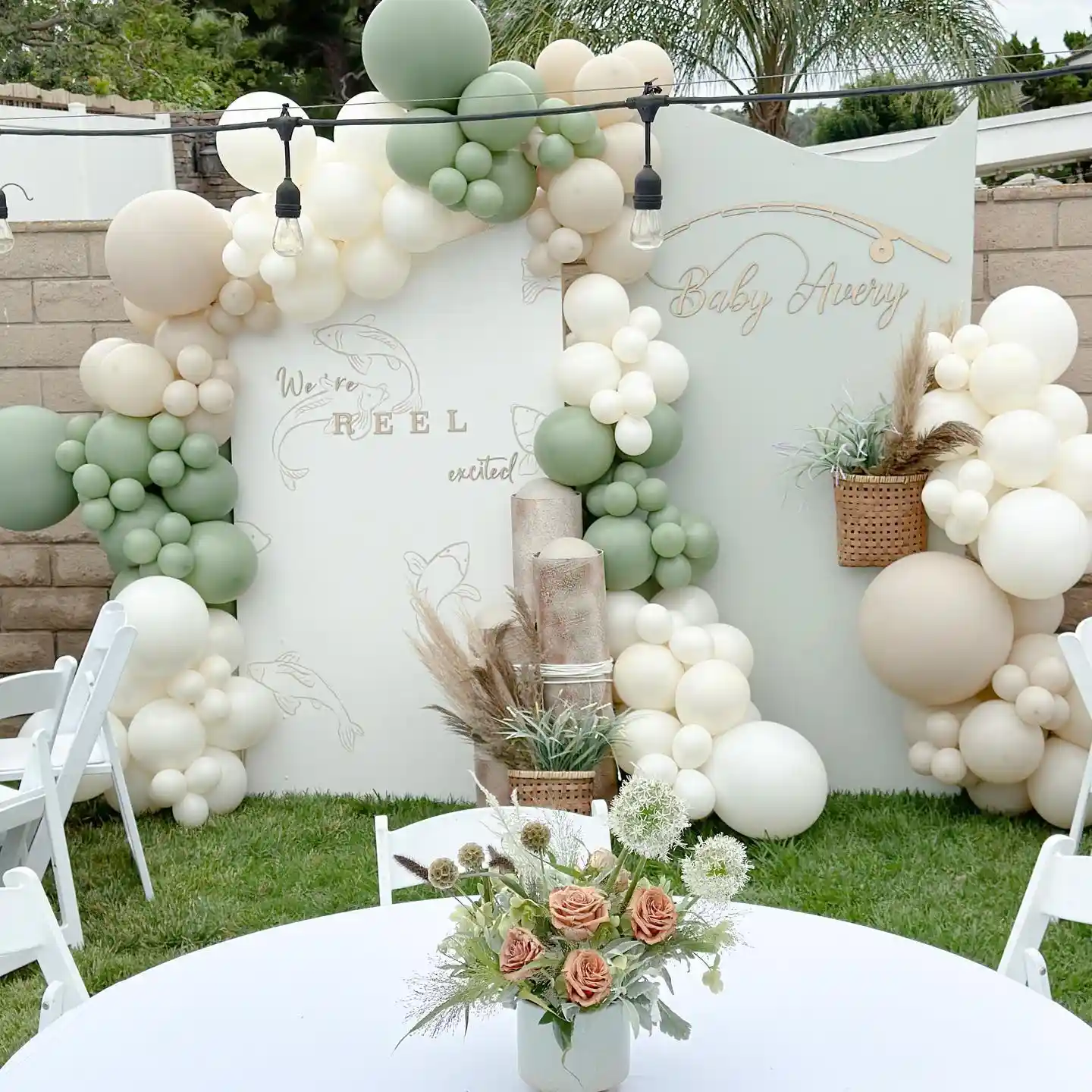
100+ themes with decoration guides, food pairings, a planning checklist, and virtual shower games.
Read the guide